Executive summary
Spiral duct fabrication quality matters because ductwork connects manufacturing decisions with project performance. Better duct quality supports smoother installation, lower rework risk, stronger contractor confidence, and a more professional supplier reputation. The central issue is repeatability: a workshop must produce stable diameters, consistent seams, clean cuts, and predictable duct lengths under normal production pressure.
Core argument
The market is not only asking duct manufacturers to make more ducts. It is asking them to make ductwork that helps contractors reduce uncertainty. Equipment decisions should therefore be judged by how well they improve process control, not only by catalogue speed.
MARKET CONTEXT
HVAC projects are becoming more demanding, and ductwork is no longer treated as a background commodity
Across commercial buildings, industrial facilities, public infrastructure, hospitals, data centers, hotels, and mixed-use developments, HVAC systems are being asked to deliver more than basic heating, cooling, and ventilation. Owners want stable comfort, lower operating cost, cleaner air distribution, better acoustic performance, faster project delivery, and more reliable documentation. These expectations change the role of ductwork. A duct package may look like a simple sheet metal supply item, but once installed it becomes part of the building's long-term energy and air-distribution performance.
This is why fabrication quality matters. A well-designed HVAC system can still lose value if the duct sections arriving on site are inconsistent, difficult to install poorly sealed, or visibly rough. Contractors then spend time correcting problems that should have been controlled in the workshop. Project managers face schedule pressure. Owners see more risk in commissioning. For duct manufacturers, quality is not only a technical preference; it is a market signal that separates reliable suppliers from shops that compete only on low initial price.
The market is also becoming less tolerant of improvisation. Green-building requirements, energy codes, indoor air quality expectations, and digital project coordination all push contractors toward predictable components. This does not mean every job requires the most expensive machinery. It means that workshops need a more disciplined view of repeatability: stable dimensions, controlled seams, clean edges, consistent material handling. and traceable production practices.
Another change is the way buyers compare suppliers. In the past, a duct package could be evaluated mainly by price, delivery date, and basic material specification. Today, many buyers also ask whether the supplier can keep quality stable across repeated orders, whether the shop can handle urgent changes, and whether the finished product reduces risk for site installation. This creates room for manufacturers that can explain their process, not only quote a low price.
WHY SPIRAL DUCT
Round spiral duct remains attractive because its geometry supports efficient airflow and practical installation
Spiral duct is widely used in HVAC and ventilation projects because the round shape offers several practical advantages. A circular section can support smoother airflow than many rectangular layouts, especially when the system is properly designed with appropriate fittings, transitions, and sealing. The spiral seam also adds stiffness to the duct wall, helping long sections maintain shape while reducing the need for excessive reinforcement in many applications.
In many projects, spiral duct can also simplify installation. Long straight runs, exposed ceiling designs, industrial ventilation routes, and high-volume air distribution systems often benefit from fewer joints, clean appearance, and modular sizing. For contractors, this can mean faster assembly and a more predictable site workflow. For building owners, round duct can provide a cleaner visual result in spaces where the air distribution system remains visible.
However, the advantages of spiral duct are not automatic. The final result depends on how the duct is formed, how the seam is locked, how the ends are cut, how fittings are matched, and how the system is sealed after installation. Good geometry gives the project a strong starting point, but fabrication quality determines whether that starting point becomes actual performance.
This is especially true in projects with long duct runs or repeated module sizes. A small diameter deviation may look harmless on one section, but repeated deviation can make connection work slower and less predictable. A rough seam may be accepted in a low-visibility area, but it still reflects forming stability. For professional duct suppliers, the goal is to make spiral duct advantages visible not only in design theory, but in the physical product delivered to site.
QUALITY DEFINITION
Fabrication quality is best understood as repeatability, not only appearance
Many people judge duct quality first by appearance: a smooth surface, a neat seam, a clean edge, and a round shape. These are important because visible defects often point to deeper process problems. But in production terms, quality is mostly about repeatability. A workshop must be able to produce the same diameter, seam engagement, length accuracy, and edge condition across batches, shifts, operators, and material lots.
Repeatability reduces friction across the whole project chain. A contractor can plan installation with greater confidence when duct sections fit as expected. A buyer can approve repeat orders more easily when the supplied ducts match previous batches. A workshop can estimate cost more accurately when scrap, rework, and manual adjustment are controlled. Even when a defect is small, repeated small defects can become expensive when multiplied across hundreds of duct sections.
The important point is that duct quality should be evaluated as a production system, not as a single sample on a clean table. One good sample proves that a machine and operator can produce quality once. Stable workshop quality means the process can produce acceptable ductwork consistently under normal production pressure.
For this reason, quality control should include practical shop-floor indicators. Operators should understand what an acceptable seam looks like, how to identify surface damage, how to confirm length accuracy, and when to stop production for adjustment. Managers should also track where rework appears: at forming, cutting, handing, packing, or customer feedback. A workshop that can see its quality problems clearly can improve faster than one that relies only on final inspection.
HIDDEN COST
Poor duct fabrication creates cost that often appears outside the fabrication workshop
A duct manufacturer may see poor fabrication as scrap or rework. A contractor sees it as delayed installation, extra sealing. more labor hours, and more coordination with other trades. A project owner may see it later as higher fan energy, comfort complaints, commissioning difficulty, or maintenance frustration. Because the cost appears in different places, the root cause can be underestimated during procurement.
Inconsistent diameter is one example. If duct sections are not reliably round or do not match fittings, installers may spend extra time forcing connections, adding sealant, or rejecting pieces. Rough cutting is another example. Poor edge quality can make handing more difficult and may create safety concerns for workers. Unstable seam forming can lead to appearance problems, leakage risk, and lower buyer confidence.
These issues are especially important when schedules are compressed. Modern projects often have narrow installation windows. When duct packages arrive late or require correction, the cost is rarely limited to the duct itself. It can affect ceiling closure, insulation, fire stopping, testing, balancing, and final handover. This is why fabrication quality should be discussed as a project-management issue as much as a manufacturing issue.
The hidden cost also affects supplier relationships. Contractors remember which suppliers create fewer problems on site. They may accept a slightly higher unit price from a duct manufacturer that delivers consistent quality because the total project cost is lower. In that sense, better fabrication can become a commercial advantage, even when the buyer's first question is still about price.
MARKET IMPLICATIONS
Duct manufacturers need to sell reliability, not only capacity
The HVAC duct market is competitive, and many workshops operate under strong price pressure. This makes it tempting to describe production capability only through speed, maximum diameter, or low quotation. Those points matter, but they do not fully answer the customer's real concern. A contractor wants to know whether the supplier can deliver the right ductwork at the right time with fewer surprises.
Reliability can be communicated through clear production standards, consistent sample quality, documented machine capability, and practical service language. For example, a supplier can explain how it controls diameter consistency. how it selects cutting methods, how operators check seam quality, and how urgent orders are scheduled. These details make the manufacturer sound like a project partner rather than a commodity vendor.
This is also why industry articles are useful in marketing. A direct product brochure is necessary for technical comparison, but a market article helps educate the buyer before the machine or service is introduced. It gives sales teams a more credible way to start the conversation: first explain the market problem, then show how the company helps solve it.
PROCESS CONTROL
Automation matters when it helps the workshop control variation
Automation should not be described only as higher speed. Speed is valuable, but uncontrolled speed can simply produce defects faster. The deeper value of a spiral duct machine is process control: stable forming pressure, repeatable feeding, consistent seam locking, reliable length control, safer cutting, and easier operator training. These factors help a workshop maintain output quality when order volume increases
A useful machine also reduces dependence on individual operator habits. Skilled operators remain important, but the best production environment does not require every acceptable duct section to depend on personal adjustment and manual correction. Clear controls, stable mechanical structure, practical tooling changeover, and accessible maintenance points allow the team to build a repeatable routine.
This is particularly relevant for workshops that serve mixed project types. A factory may need small diameters for commercial air distribution, larger diameters for industrial ventilation, galvanized steel for standard HVAC, stainless steel for special environments, and different cutting preferences depending on the order. The right equipment should support that range without turning every changeover into a production interruption.
Good automation also improves training. When machine settings are clearer and production steps are more repeatable, new operators can learn faster and experienced operators can focus on monitoring quality instead of constantly correcting the process. Over time, this helps the workshop build a more stable production culture.
BUYER EVALUATION
A practical checklist for evaluating spiral duct fabrication equipment
Buyers should begin with their real order profile, not only with the maximum capacity shown in a catalogue. The common diameter range, material thickness, coil width, average duct length, expected daily output, available floor space, operator skill level, and after-sales support requirements all matter. A machine that looks impressive on paper may not be the best fit if it does not match the workshop's actual production mix.
Diameter coverage should be checked against frequent sizes, not only extreme sizes. Material capability should include both the normal material and the occasional special order. Forming stability should be judged by sample ducts, seam consistency, surface condition, and diameter repeatability after continuous operation. Cutting configuration should be selected according to edge quality, speed, material, consumable cost, noise, dust, and maintenance preference.
Controls and service are equally important. A clear HMI, practical job setting, emergency stops, guards, documentation, commissioning support, spare parts availability, and remote troubleshooting can all affect the long-term value of the equipment. In many factories, the difference between a good investment and a frustrating one is not only the machine body; it is the support system around it.
A careful buyer should also ask what happens after installation. Who trains the operators? How are common faults diagnosed? Which spare parts should be kept in stock? How quickly can the supplier respond if production stops? These questions may seem less exciting than machine speed, but they often determine how smoothly the investment performs after the first month.
Buyer checklist
Define the common diameter range before comparing maximum diameter claims.
Ask for sample ducts made from the materials and thicknesses you actually use.
Check seam quality after repeated production, not only at startup.
Evaluate cutting quality and downstream handling together.
Confirm installation, training, spare parts, and service response before purchase.
HYRUN NOTE
Where HYRUN fits into this discussion
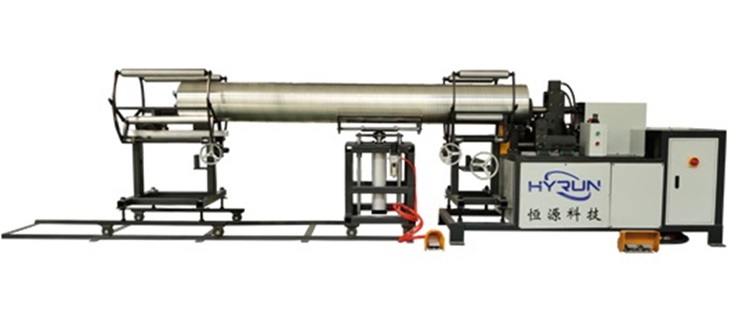
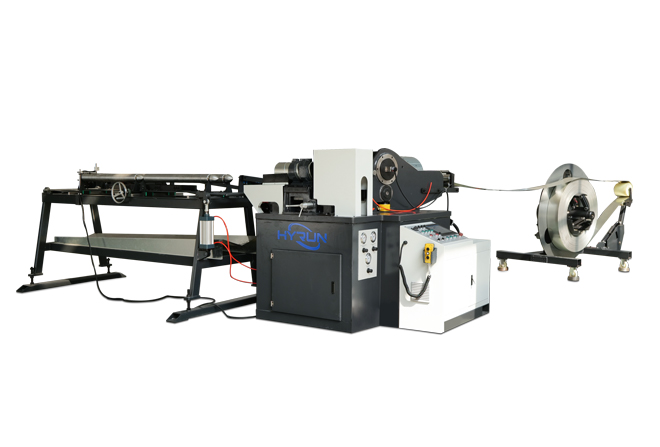
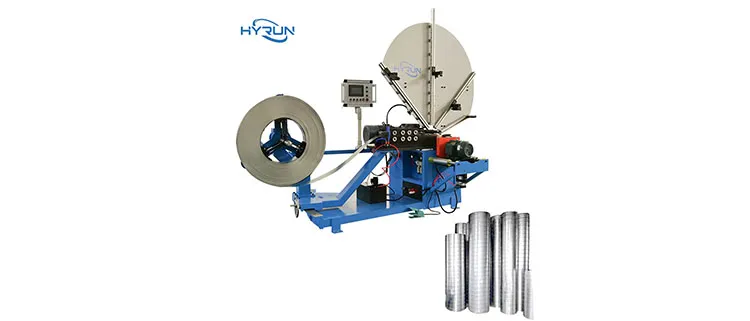
HYRUN's Steel-belt Spiral Duct Machine with 4 Sets Forming Rollers is designed for workshops that need practical diameter flexibility and stable round duct forming. Its product positioning is strongest when presented as part of a repeatable fabrication workflow rather than as a standalone promotional claim. For buyers, the relevant Value is the ability to support steady spiral duct production, flexible size requirements, and cleaner process control.
The machine is suitable for round spiral air duct fabrication with galvanized steel and stainless steel within the stated material ranges. It offers practical cutting configuration options and a wide working diameter range for workshops serving HVAC duct production. In an industry article, this product message should remain brief: HYRUN provides equipment that helps manufacturers convert market demand for better duct quality into a more controlled production process.
That soft-selling approach is usually more credible for professional readers. Instead of asking the reader to believe a slogan, the article first explains why quality matters, where project costs appear, and how equipment decisions affect repeatability. The product then appears as one example of how a duct manufacturer can respond to those market pressures.
For online publishing, this section should remain concise. Readers who want technical details can move from the article to a product page, quotation request, or specification sheet. The article's job is to build trust and frame the problem clearly; the product page can then provide dimensions, configurations, photos, and commercial details.
CONCLUSION
The future of duct fabrication will reward workshops that can prove consistency
HVAC projects are moving toward higher performance expectations, tighter schedules, and more disciplined quality control. Spiral duct will continue to be attractive in many applications because it combines airflow efficiency, structural strength, clean appearance, and installation practicality. But the market will increasingly judge suppliers by their ability to deliver consistent ductwork at scale.
For duct manufacturers, the opportunity is clear. Better fabrication quality can reduce rework, support contractor confidence, improve project execution, and strengthen supplier reputation. For buyers, the right equipment decision should focus on repeatability, service support, and fit with the real order profile. In this sense, spiral duct fabrication quality is not a small workshop detail. It is part of how modern HVAC projects control risk and deliver long-term value.
References
International Energy Agency, Buildings: https://www.iea.org/reports/buildings
International Energy Agency, Space Cooling: https://www.iea.org/energy-system/buildings/space-cooling
U.S. Department of Energy, Minimizing Energy Losses in Ducts: https://www.energy. gov/energysaver/minimizing -energy-losses-ducts
OSHA, Machine Guarding: https://www.osha.gov/machine-guarding
SMACNA Round Industrial Duct Construction Standards: https://georgiasmacna.com/docs/round -industrial-duct-construction-standards/
HYRUN product page: https://www.hyruntech. com/products/steel-belt-spiral-duct-machine-with-4-sets-forming-rollers/

 Tube Mold Spiral Duct Machine
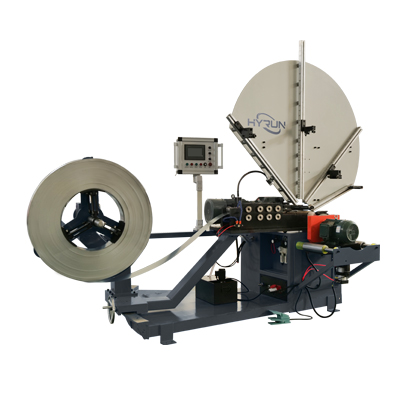 Steel Belt Spiral Duct Machine With 4 Sets Forming Rollers
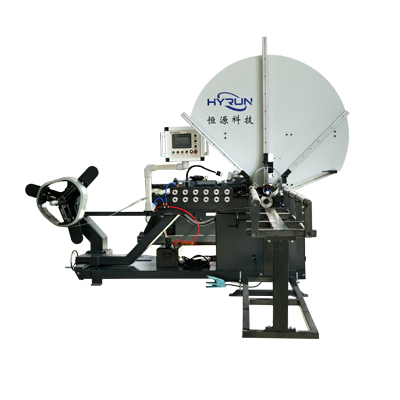 Steel Belt Spiral Duct Machine With 6 Sets Forming Rollers
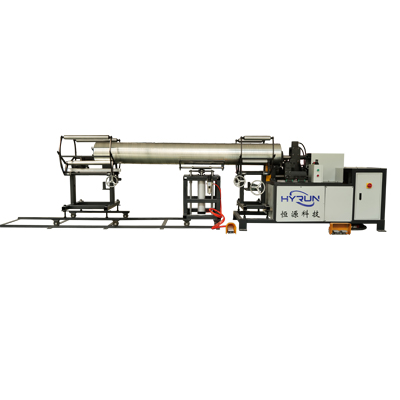 Spiral Duct Flanging Machine
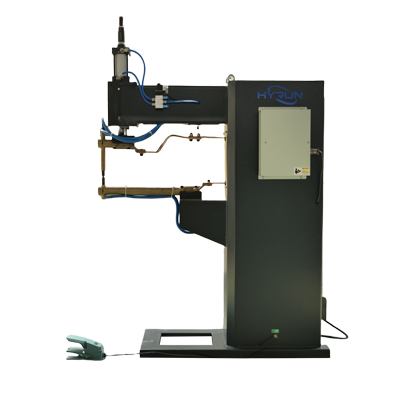 Pneumatic Spot Welding Machine
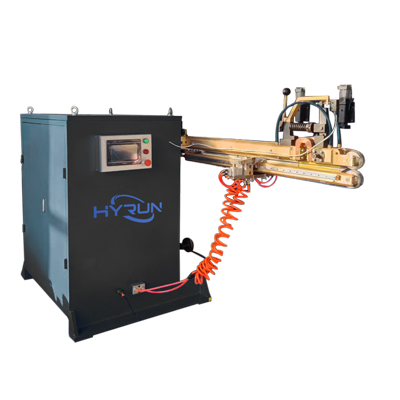 Seam Stitch Welding Machine
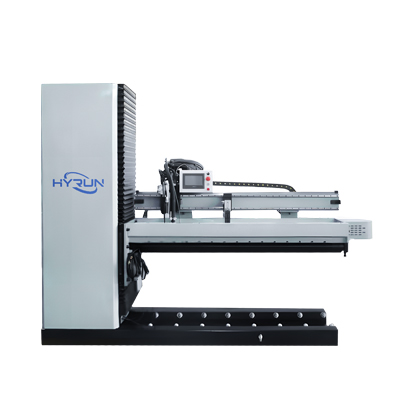 Straight Seam Automatic Welding Machine
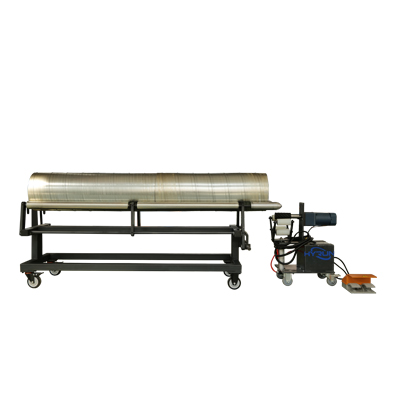 Duct Connection Welding Rack
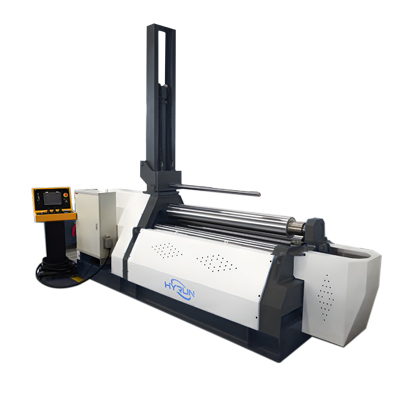 4-Roller Plate Rolling Machine
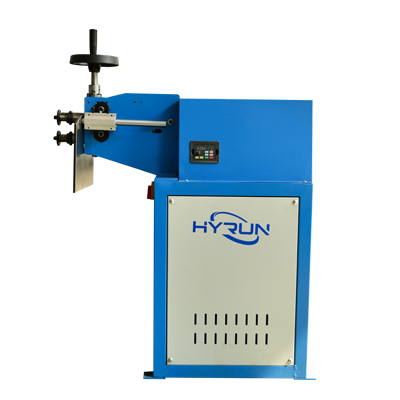 Reel Machine
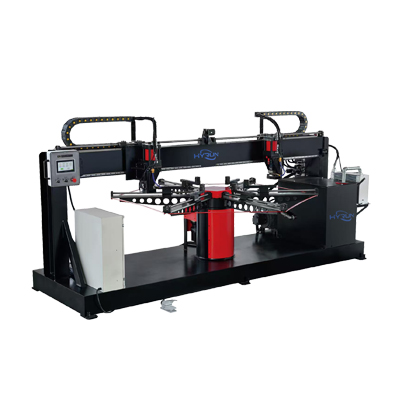 Round Duct Flange Punching Machine
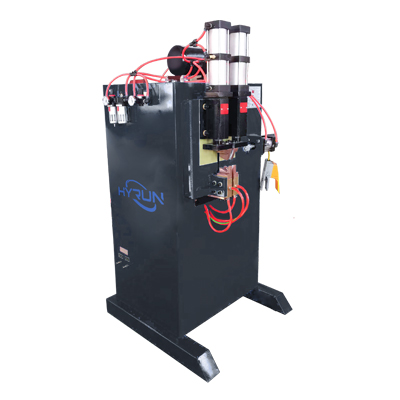 Round Flange Welding Machine
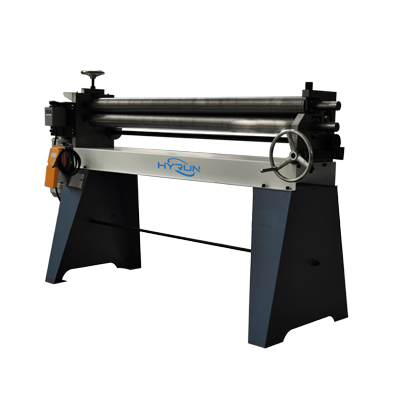 Asymmetrical 3-Roller Bending Machine
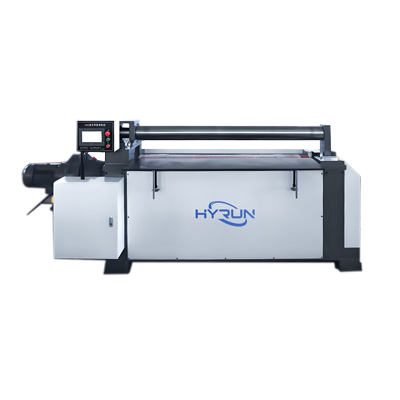 Hydraulic Rolling Machine
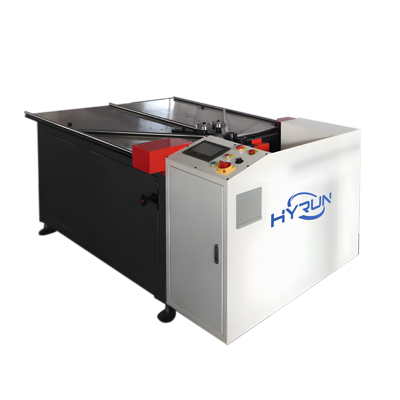 Hydraulic Flange Forming Machine
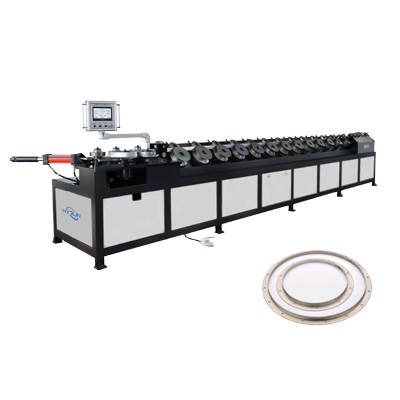 Round Duct Flange Forming Machine
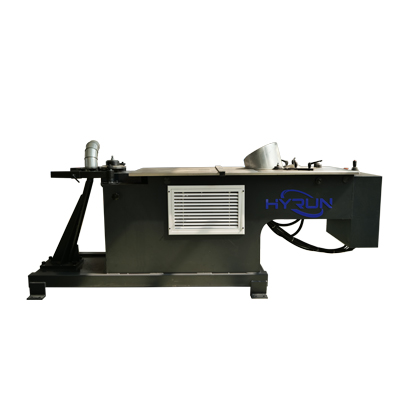 Hydraulic Elbow Machine
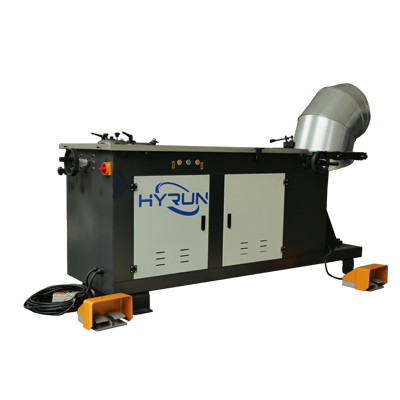 Electric Elbow Duct Machine
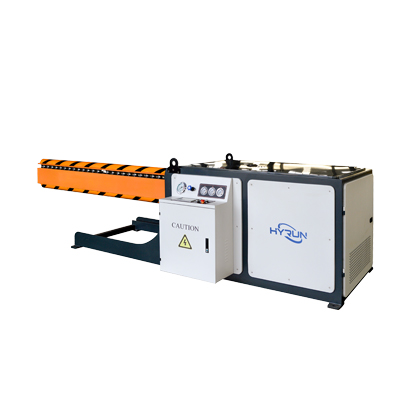 Oval Duct Machine
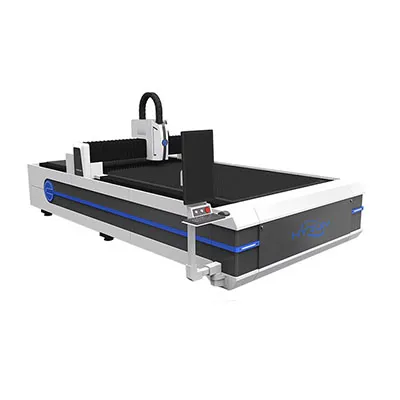 CNC Laser Cutting Machine
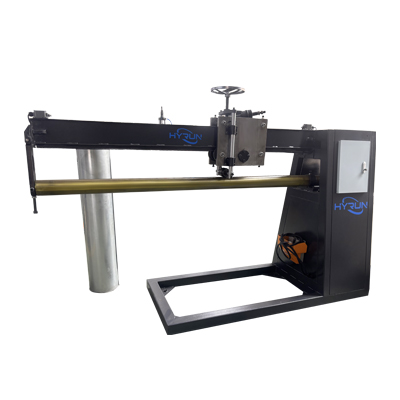 Round Duct Seam Closing Machine
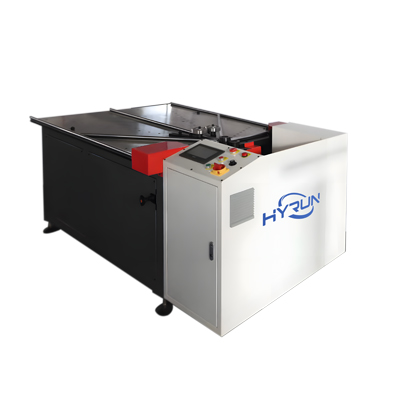 Hydraulic Round Duct Edge Forming Machine
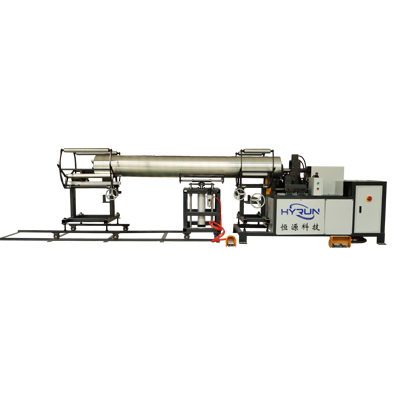 Spiral Duct Edge Forming Machine
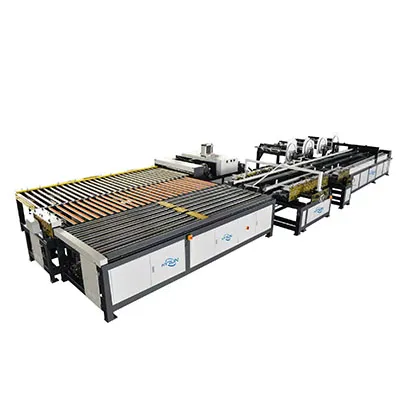 Auto Duct Line 5
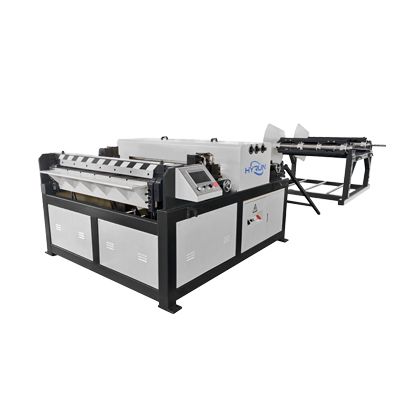 Auto Duct Line 3
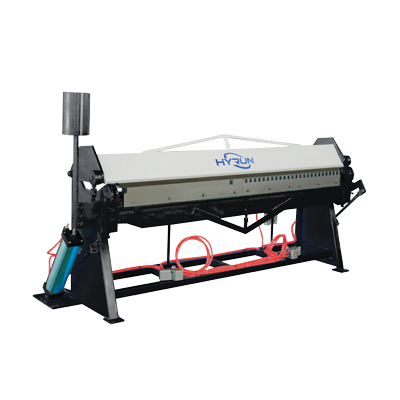 Pneumatic Folding Machine
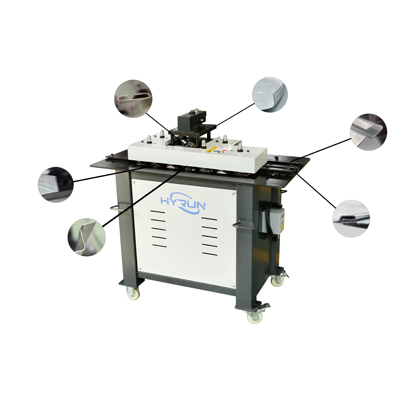 Lock Forming Machine
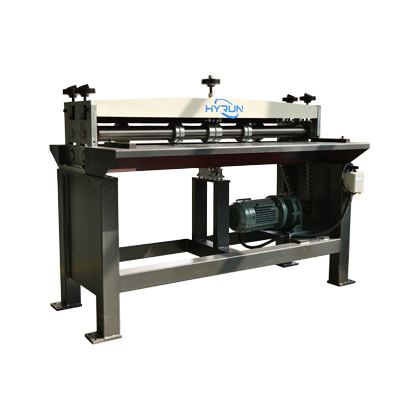 Grooving Machine
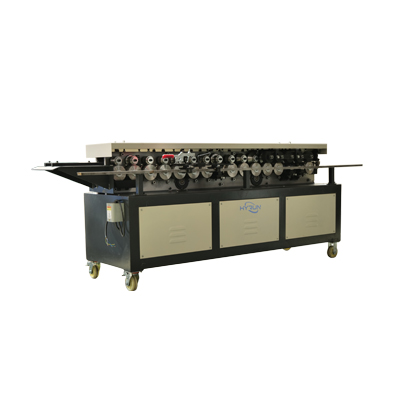 TDF Flange Forming Machine
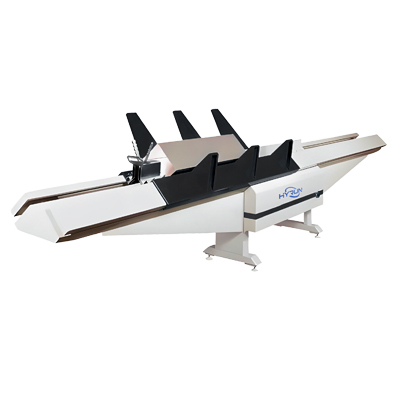 Square Duct Seam Closing Machine
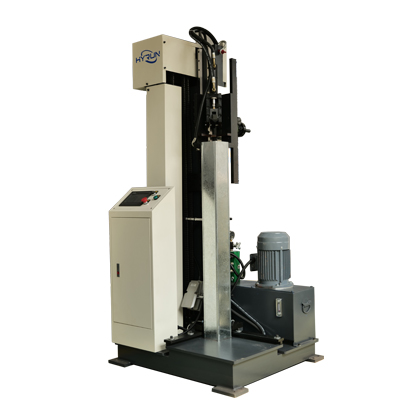 Hydraulic Seam Closing Machine
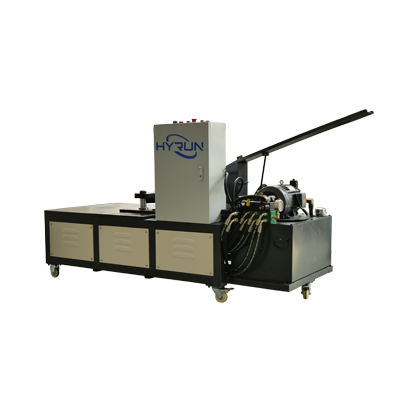 Corner Binding Machine
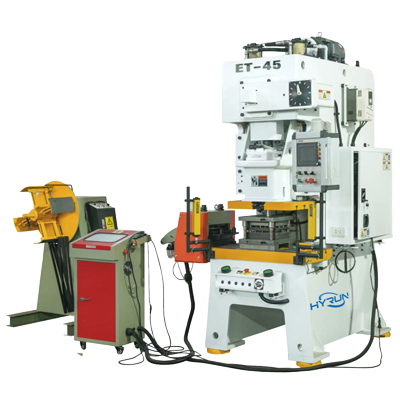 Corner Production Line
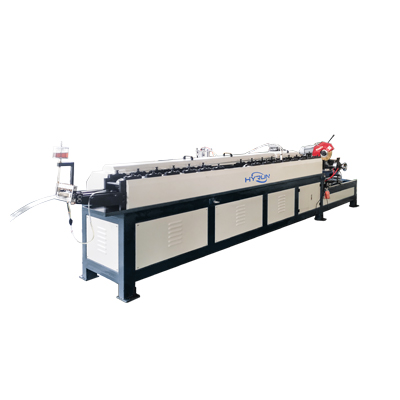 TDC Flange Forming Machine
 Electric Seam Closing Machine
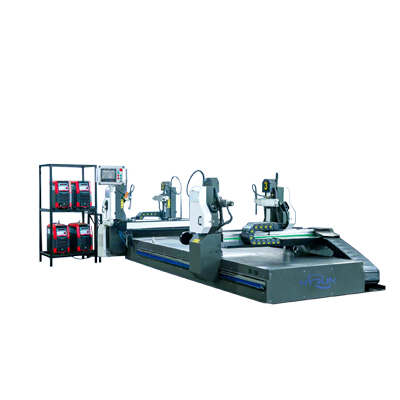 Angle Steel Flange Welding Machine
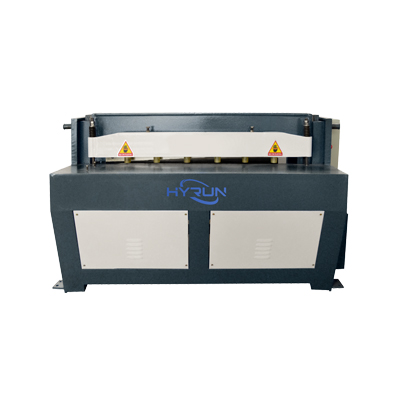 Electric Shearing Machine
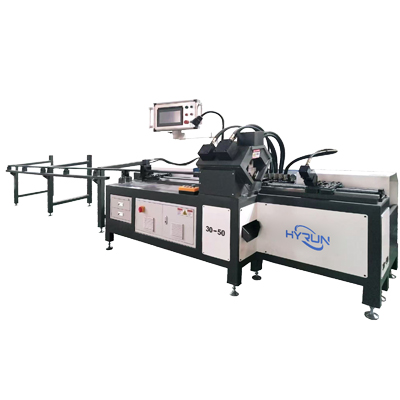 Angle Steel Punching Machine
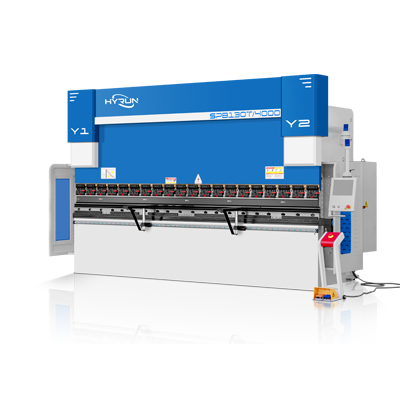 CNC Press Brake