
EN

Why Material Utilization and Waste Control Matter in Duct Fabrication

Table of Content [Hide]

    HYRUN Industry Article


    A text-focused industry article for HVAC duct manufacturers looking at sheet metal yield, coil usage, scrap reduction, process discipline, and how material waste quietly affects profit in ventilation duct production.


    Executive summary

    In HVAC duct fabrication, profit is not shaped only by machine speed or labor cost. Material utilization has a direct effect on quotation accuracy, production stability, cash flow, and competitiveness. Factories that control scrap, rework, offcuts, and unplanned material loss can protect margins even when project pricing becomes tight.


    INDUSTRY CONTEXT

    Material cost is one of the most visible pressures in duct manufacturing

    HVAC duct fabrication is a material-intensive business. Whether a workshop produces spiral duct, rectangular duct, round duct fittings, elbows, reducers, or flanged sections, a large part of the final cost is connected to galvanized steel, stainless steel, aluminum, or other sheet metal materials.


    For many duct manufacturers, material price changes are difficult to control. Steel market fluctuations, supplier terms, local availability, minimum order quantities, and project bidding pressure can all influence the final margin. When the market becomes competitive, the factory cannot simply pass every cost increase to the customer.


    This is why material utilization deserves more attention. A factory may negotiate a better coil price, but if cutting errors, poor nesting, unstable forming, or repeated rework create unnecessary scrap, the saving disappears inside production. Waste is often less dramatic than a machine breakdown, but it happens every day and slowly reduces profit.


    In project-based HVAC work, the effect becomes stronger because orders often include mixed duct sizes and special fittings. If the workshop does not manage material planning carefully, small inefficiencies accumulate across the full project.


    HIDDEN COST

    Scrap is not only the metal thrown away

    When people discuss material waste, they often think only about visible scrap piles. In reality, duct fabrication waste includes several forms: unusable offcuts, incorrect lengths, rejected seams, damaged duct sections, wrong sizes, overproduction, repeated test pieces, excessive trimming, and rework caused by unstable forming quality.


    Each type of waste creates more than material loss. It also consumes operator time, machine time, electricity, air supply, floor space, handling effort, and management attention. A rejected duct section may require new material, but it also disrupts the schedule and can delay the next production step.


    There is also an accounting problem. If scrap is not measured clearly, factories may underestimate its cost. A workshop may believe a project was profitable because the selling price looked acceptable, while the real margin was reduced by material waste and rework that were never recorded properly.


    For growing duct manufacturers, establishing simple waste tracking can be a practical first step. Even a basic record of scrap reasons helps management identify whether the issue comes from planning, machine setup, operator training, material quality, or drawing changes.


    PROCESS CONTROL

    Accurate setup protects both quality and material yield

    Machine setup has a direct relationship with material utilization. In spiral duct production, roller adjustment, strip feeding, lock seam stability, and diameter control influence whether the finished duct is accepted the first time. In rectangular duct production, cutting accuracy, bending consistency, flange quality, and assembly alignment affect whether sheets become finished products or rework.


    The same principle applies to duct fittings. Elbows, reducers, branch fittings, and flanged parts often require more careful forming than straight duct sections. A small setup error can create shape problems, seam leakage, or dimensional mismatch, especially when the material is thin or the diameter range changes frequently.


    Stable machinery helps reduce trial-and-error production. Operators still need skill, but machines with consistent forming performance, clear adjustment points, and suitable tooling make it easier to produce repeatable results. When the first piece is correct, the workshop saves both material and time.


    This is one reason buyers should evaluate machinery beyond headline speed. A fast machine that requires frequent correction may waste more material than a slightly slower machine with stable output and easier adjustment.


    PLANNING

    Material planning should begin before production reaches the machine

    Waste control starts before the operator presses the start button. It begins with order review, drawing confirmation, size grouping, material selection, coil or sheet allocation, and production sequencing. If these steps are rushed, the machine may produce efficiently but still follow an inefficient plan.


    For example, grouping similar diameters or thicknesses can reduce changeover and trial pieces. Planning standard lengths can reduce unnecessary trimming. Separating stainless steel, galvanized steel, and aluminum production can prevent confusion and handling damage. Confirming special requirements before cutting helps avoid remaking parts after production has started.


    In many workshops, material planning is still handled by experience. Experience is valuable, but as order volume increases, the factory benefits from clearer rules: how to use offcuts, when to reserve material for fittings, how to record leftover coils, and how to communicate drawing changes to production.


    The goal is not to create a complicated office system. The goal is to make material decisions visible enough that the factory can learn from them.


    MARKET PRESSURE

    Better material utilization helps factories compete without racing to the lowest price

    In many HVAC markets, buyers compare duct fabrication suppliers mainly by price and delivery time. This creates pressure for manufacturers to quote aggressively. However, a factory that does not understand its material yield may quote too low and later discover that the project margin is much weaker than expected.


    Material utilization gives manufacturers a more realistic cost base. When a factory knows its typical yield for different duct types and materials, it can quote with greater confidence. It can also explain price differences more professionally when a project requires stainless steel, thicker material, special fittings, or higher sealing standards.


    Waste control also supports delivery reliability. If a project requires repeated remakes, the factory may run short of material, delay assembly, or interrupt other orders. Reducing waste therefore improves not only cost, but also production planning and customer trust.


    In this sense, material utilization is a competitive tool. It allows a workshop to protect profit without simply raising prices, and to compete on operational discipline rather than only on discounting.


    EQUIPMENT SELECTION

    Machine choice should consider material range, adjustment stability, and repeatability

    When selecting duct machinery, buyers often ask about maximum diameter, working speed, motor power, and price. These are necessary questions, but material utilization adds another layer. The buyer should also ask how the machine performs across the real material range used in the workshop.


    A machine should match the factory's common sheet thickness, material type, product size range, and daily production pattern. If the equipment is frequently pushed outside its comfortable range, the workshop may face more adjustment time, unstable forming, and higher scrap. If the machine is oversized or poorly matched, the investment may not translate into better yield.


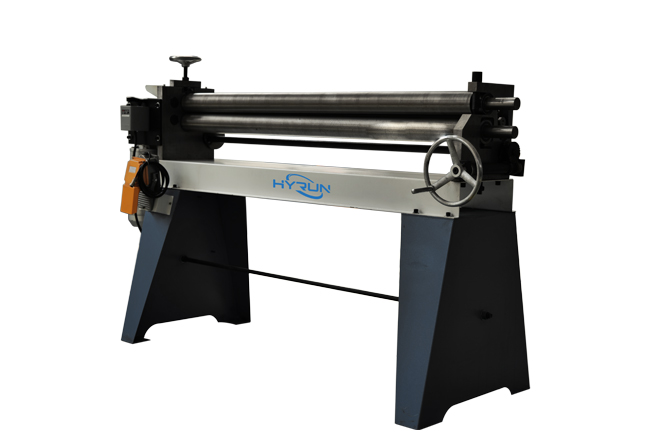
    Tooling and forming structure also matter. Stable forming rollers, reliable seam forming, suitable flanging equipment, accurate cutting, and repeatable positioning all help reduce mistakes. The more often the workshop changes product type, the more important clear adjustment and operator-friendly setup become.


    For this reason, practical equipment consultation should begin with production reality rather than only catalogue numbers.


    Buyer checklist

    • Confirm the common material types and sheet thickness range before selecting machines.

    • Evaluate whether the machine can maintain stable output across frequent size changes.

    • Ask how setup, roller adjustment, tooling change, and first-piece confirmation are handled.

    • Consider the cost of rework and scrap, not only the purchase price of the machine.

    • Match equipment capacity with real project demand instead of buying only by maximum specification.


    HYRUN NOTE

    How HYRUN can connect machinery solutions with waste reduction goals

    HYRUN can use material utilization as a practical conversation with customers. Instead of presenting machines only by model and parameter, HYRUN can ask how the customer controls scrap, what materials are most common, where rework happens, and which product categories create the most waste.


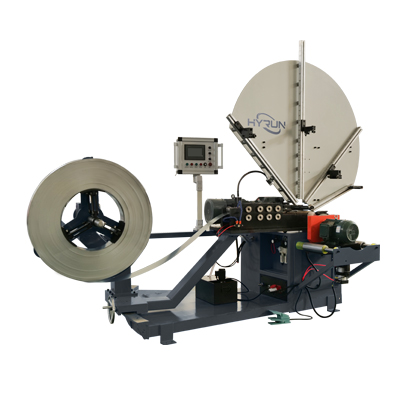
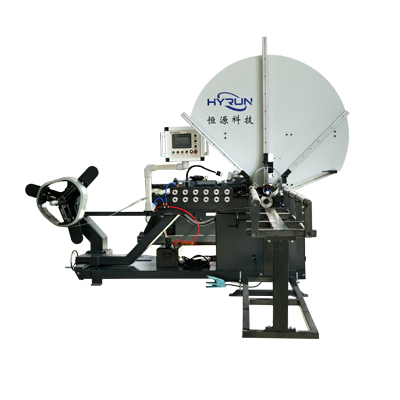
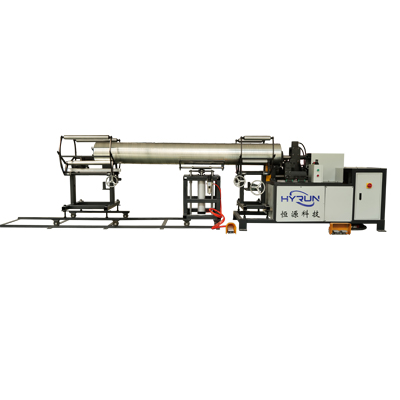
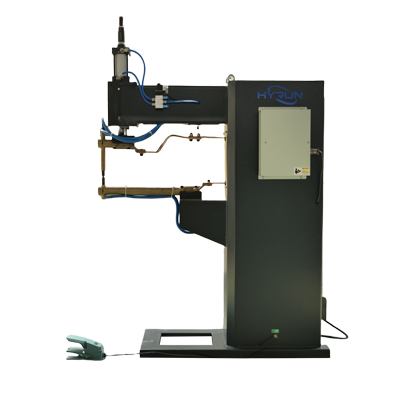
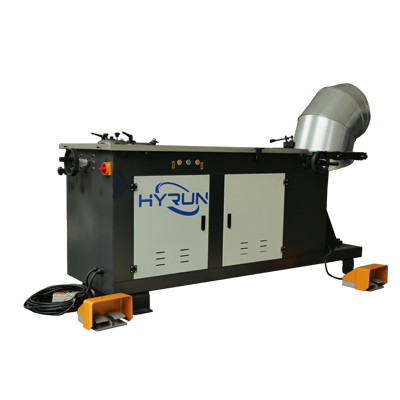
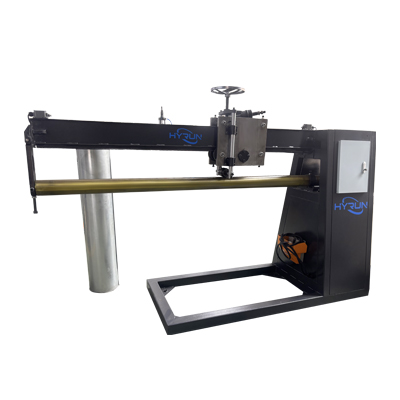
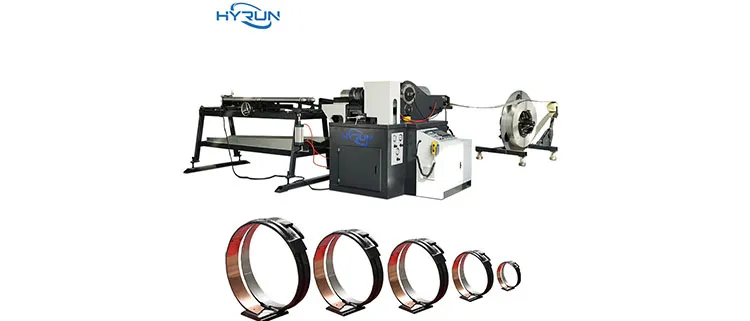
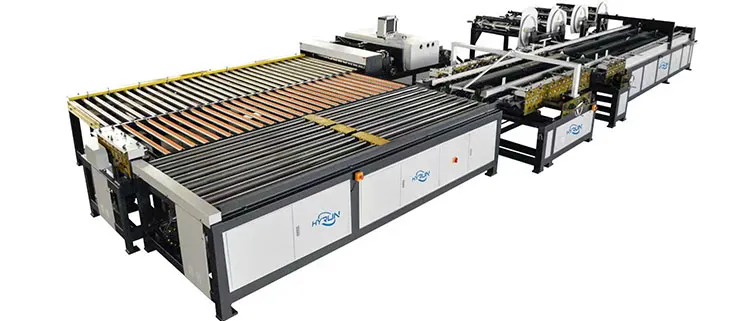
    This helps recommend equipment more accurately. A spiral duct machine, duct forming line, flanging machine, elbow machine, or welding machine should be selected according to the customer's product mix, material thickness, quality expectations, and operator workflow.


    For overseas buyers, this approach is especially useful because the cost of wrong equipment selection is high. If a machine does not match local material standards or common duct sizes, the customer may lose material, time, and confidence after installation.


    By focusing on stable forming, practical adjustment, and long-term production efficiency, HYRUN can position its duct machinery as a tool for reducing hidden manufacturing cost, not only as a production machine.


    CONCLUSION

    The most profitable duct is the one produced correctly the first time

    Material waste control is not a small housekeeping topic. It is connected to quotation accuracy, machine selection, operator training, quality control, delivery reliability, and long-term competitiveness in HVAC duct fabrication.


    Factories that turn more purchased material into accepted ductwork gain a quiet but powerful advantage. They reduce hidden cost, improve production flow, and protect margins in a market where customers expect both competitive pricing and dependable quality.


    For duct manufacturers planning new equipment, the key question is not only how fast a machine can run. The better question is how consistently the full workshop can produce correct parts with less waste.


    References

    • SMACNA HVAC Duct Construction Standards overview: https://www.smacna.org/store/product/hvac-duct-construction-standards-metal-and-flexible-third-edition-50

    • U.S. Department of Energy, Minimizing Energy Losses in Ducts: https://www.energy.gov/energysaver/minimizing-energy-losses-ducts

    • International Energy Agency, Buildings: https://www.iea.org/reports/buildings

    • OSHA, Machine Guarding: https://www.osha.gov/machine-guarding

    • HYRUN website: https://www.hyruntech.com/


    HYRUN Industry Article | www.hyruntech.com | info@hyruntech.com

    References
    PREV: No information
    We use cookies to offer you a better browsing experience, analyze site traffic and personalize content. Part of the tracking is necessary to ensure SEO effectiveness,
    By using this site, you agree to our use of cookies. Visit our cookie policy to learn more.
    Reject Accept